ALSE.BEAUTY / RESEARCH LAB / 2026.09
8 beauty cases: how conversational AI changes the customer journey
From brand advisors and fragrance discovery to order support and commerce inside AI platforms.
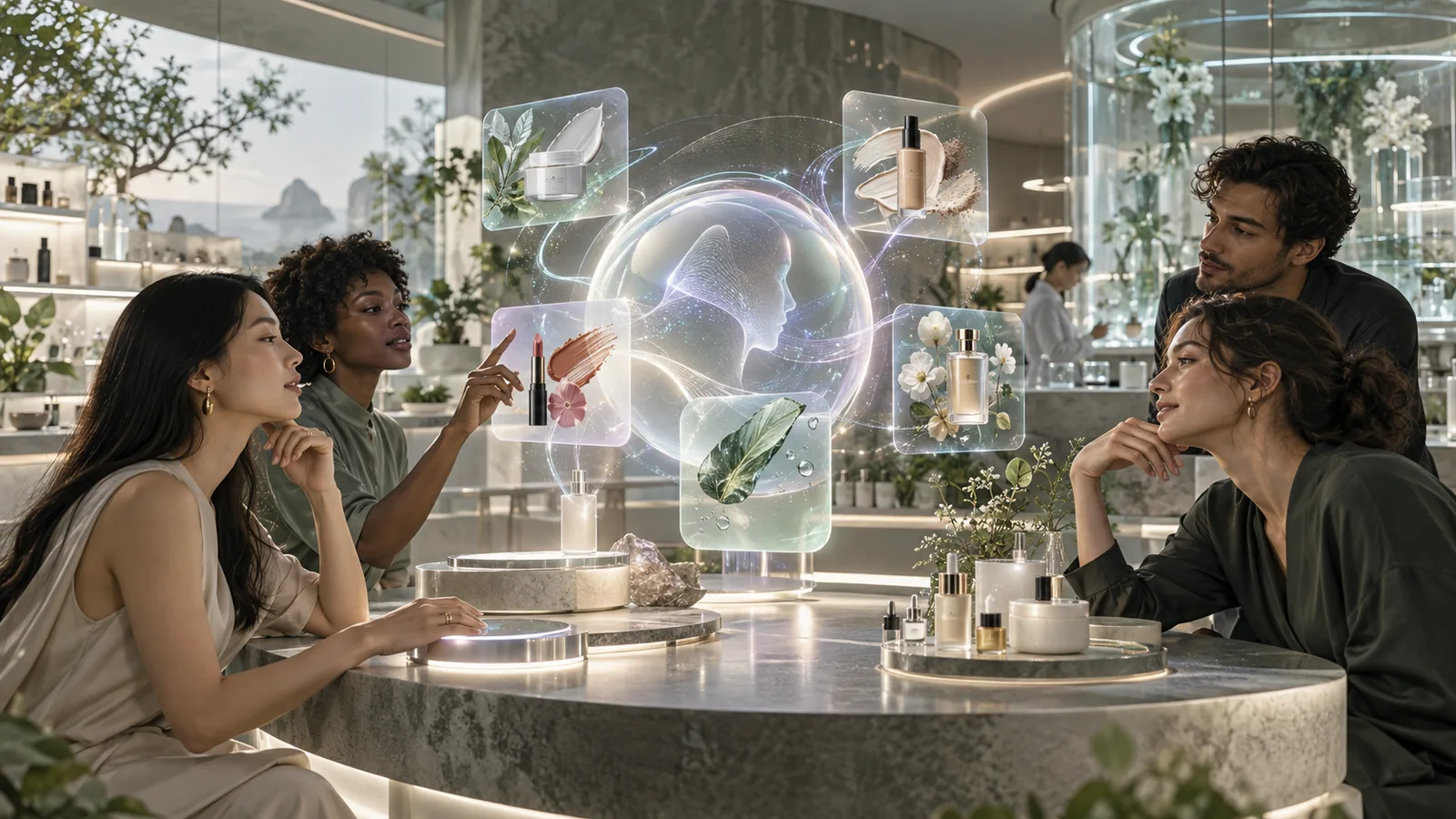
A customer can describe a desired scent, ask about a beauty routine or check an order in ordinary language. The interface interprets the request, retrieves product or operational knowledge, and recommends a next step. The eight cases below show different ways of building that connection.
They concern digital services offered by brands, retailers and a beauty group—not eight cosmetics formulated jointly with an AI company. Kiehl’s and YSL Beauty share one L’Oréal/Salesforce architecture. We compare their customer roles without counting them as independent technology platforms.
US conversations reported for Beauty Genius. Conversations are not unique users.
Sources [01]
Cases across brands, retailers and a group. Some share the same infrastructure.
Publication period of the launch and deployment evidence reviewed here.
A confirmed launch is not a measure of adoption. Figures below are attributed to the reporting company or study; a published capability does not establish availability in every country, account or channel.
Eight customer-facing cases
L’Oréal Paris
Beauty Genius
Live service; published conversation count
What the evidence shows
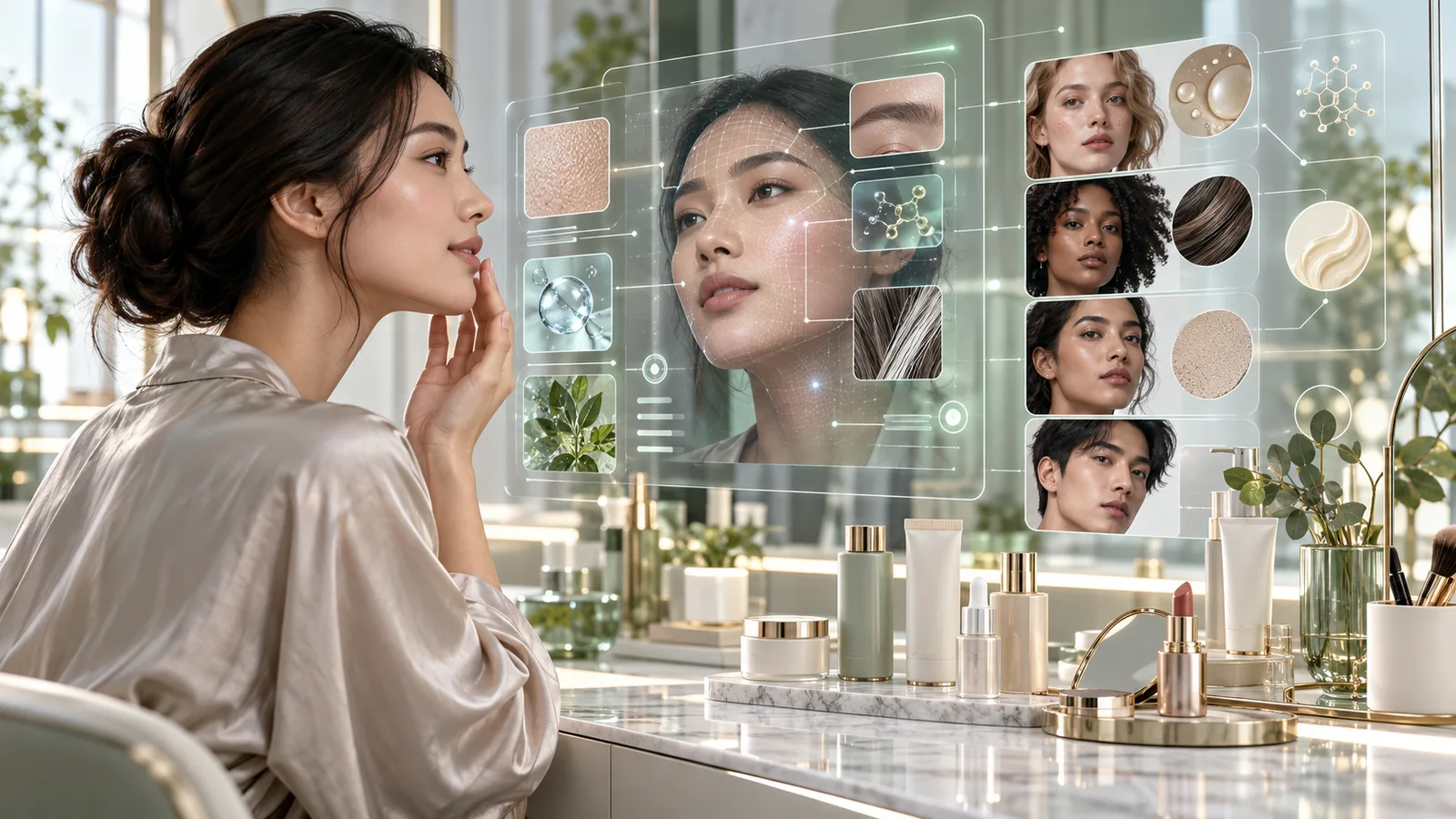
L’Oréal describes Beauty Genius as a combination of diagnostic, generative and agentic AI: skin and hair assessments, recommendations across 750+ L’Oréal Paris products, virtual try-on and links to US retailers. Its corporate page reports more than 1.2 million consumer conversations in the United States and availability on the web and WhatsApp.
Microsoft’s October 2025 account documents Azure OpenAI Service, GPT-4o and retrieval-augmented generation, which connects generated responses to the group’s knowledge. This is an architectural description from that publication, not a guarantee that the model configuration has remained unchanged.
Business interpretation · Alse.Beauty
Brand expertise becomes a service that connects a question, assessment, recommendation and retail destination.
Evidence boundary
The 1.2 million figure counts conversations, not customers, purchases or independent evidence of sales uplift.
Fenty Beauty
Rose Amber
Live experience documented by its provider
What the evidence shows
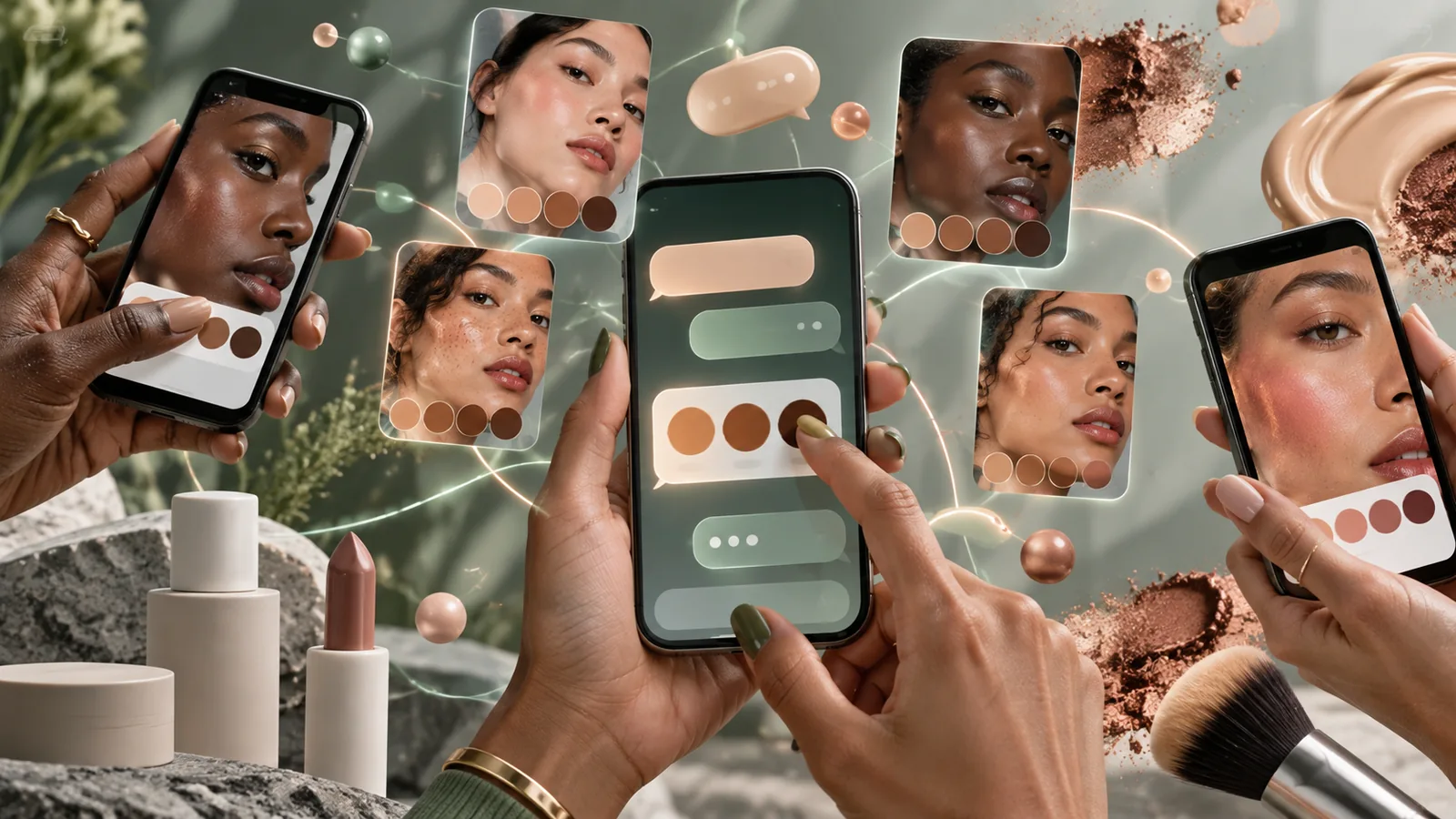
Rose Amber is Fenty’s beauty advisor on WhatsApp, built with charles. The provider documents guided quizzes, shade and product suggestions, answers to free-form questions, and customer reviews or videos across Fenty Beauty, Skin and Hair. Its case page links to the experience.
charlesAI supports LLM-based agents and model selection. The public case does not identify Rose Amber’s specific underlying model. The evidence supports a conversational AI deployment; it does not establish a separate direct development partnership between Fenty and Meta.
Business interpretation · Alse.Beauty
Messaging can act as a digital beauty counter: discovery continues inside a conversation rather than ending at a product-page link.
Evidence boundary
No comparable public active-user, conversion or retention figure was identified in the cited case.
Jo Malone London
AI Scent Advisor
Launched 2 December 2025 · US and UK

What the evidence shows
The Estée Lauder Companies launched Jo Malone London’s AI Scent Advisor with Gemini and Vertex AI. Customers describe preferences in everyday language; the system maps them to the brand’s scent attributes. A later Google Cloud account describes Gemini Enterprise Agent Platform and the translation of subjective descriptions into structured queries.
Google Cloud reports doubled conversion rates for Scent Advisor users and improved satisfaction. It also describes visits to stores to try recommended fragrances. These are partner-reported results, without a published controlled comparison or sample size on the cited page. A separate Pinterest Scent Scanner, announced 17 June 2026 for the US and France, starts from visual preferences.
Business interpretation · Alse.Beauty
AI can translate personal context into category expertise and help a customer prepare for a physical consultation.
Evidence boundary
Digital scent discovery cannot reproduce smell; the conversion claim is not proof that AI alone caused the change.
Kiehl’s
Agentforce · Prompt-to-Personalised Website
Production deployment documented 11 September 2026

What the evidence shows
Salesforce documents a consumer order-status agent on Kiehls.com. After verifying identity, it retrieves current order and tracking information. Questions outside its scope move to an advisor with the conversation history; outside staffed hours, a case can be created for follow-up.
L’Oréal separately identifies a Prompt-to-Personalised Website experience for Kiehl’s. That initiative should not be conflated with the order-support deployment: the public description does not provide equivalent usage or performance detail.
Business interpretation · Alse.Beauty
A useful customer AI service can begin with a bounded operational task and reliable access to current data.
Evidence boundary
24/7 agent availability does not mean a human advisor is available around the clock. The two Kiehl’s initiatives have different evidence levels.
YSL Beauty
Agentforce
Production deployment · shared framework with Kiehl’s

What the evidence shows
YSL Beauty uses the same L’Oréal/Salesforce order-status framework. Shared conversation logic and safeguards are adapted through brand- and market-specific subflows. The agent verifies the customer, retrieves order data and either answers within its remit or transfers the conversation.
Salesforce says the consumer deployment selects from approved responses rather than composing unrestricted new answers. Medical or other sensitive topics go to an advisor. The cited page’s 60% resolution figure is a projection, not an achieved result; its headline about 64% faster handling concerns advisor assistance and is not a measured result for this consumer agent.
Sources [08]
Business interpretation · Alse.Beauty
A group can share operational AI infrastructure while preserving each brand’s language and boundaries.
Evidence boundary
This is a second branded deployment of shared technology, not independent evidence of a second technical architecture.
Sephora
Sephora app in ChatGPT
US pilot announced 24 March 2026
What the evidence shows
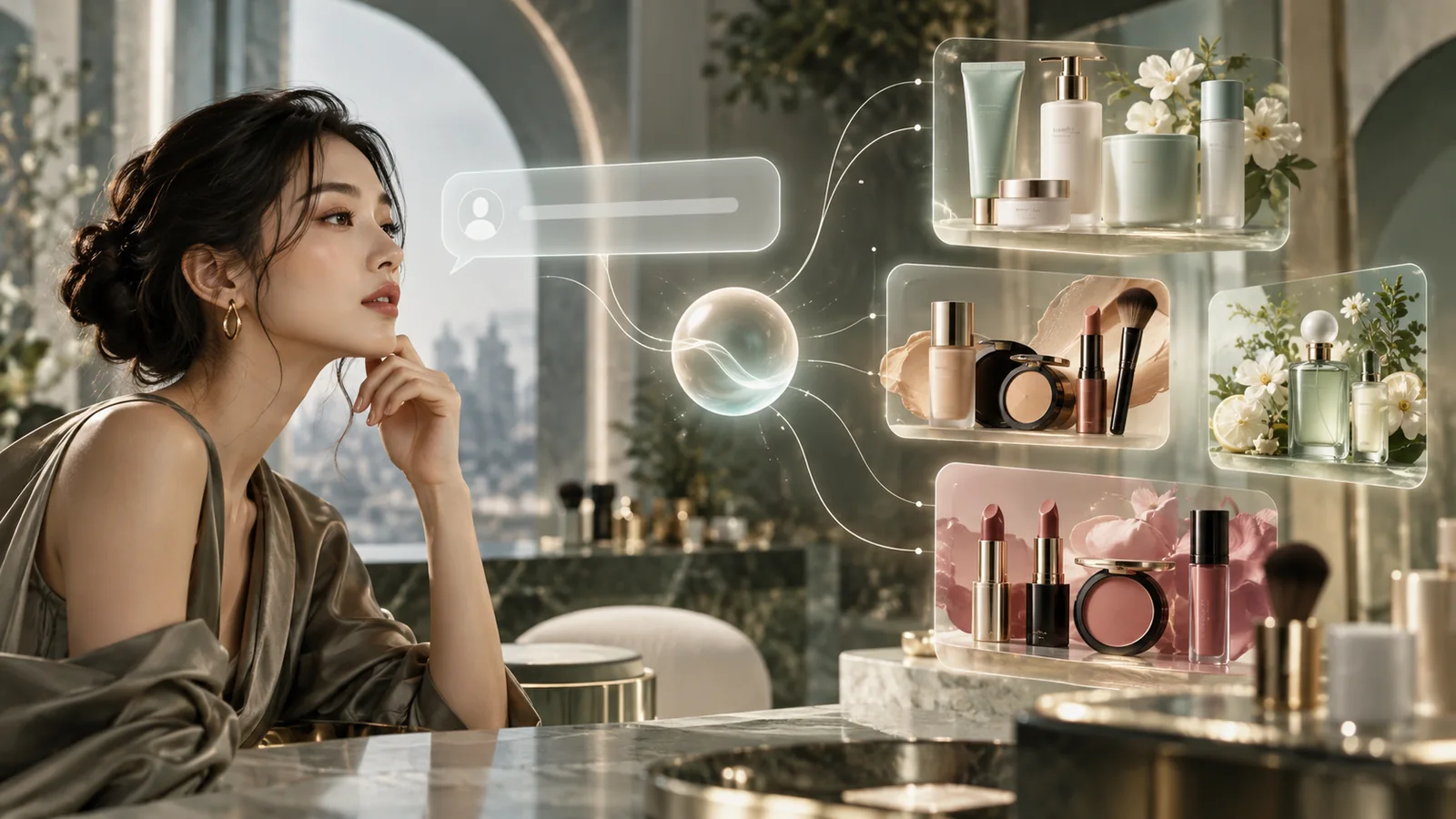
Sephora announced its app in ChatGPT as a US pilot for curated advice, product discovery and shopping. The release also describes loyalty rewards and member benefits, including shipping promotions and samples.
The wording matters: benefits are described as capabilities customers will be able to use, while payment and checkout within the app are explicitly assigned to future updates. The launch release alone cannot establish that all those features subsequently became available.
Sources [10]
Business interpretation · Alse.Beauty
A retailer’s catalog can become accessible from an external conversational interface; the website is no longer the only possible starting point.
Evidence boundary
This study does not treat planned in-app checkout as a verified completed rollout or infer adoption from Sephora’s total loyalty membership.
Ulta Beauty
Ulta AI
Ulta AI launched; Google commerce rollout announced 22 April 2026
What the evidence shows
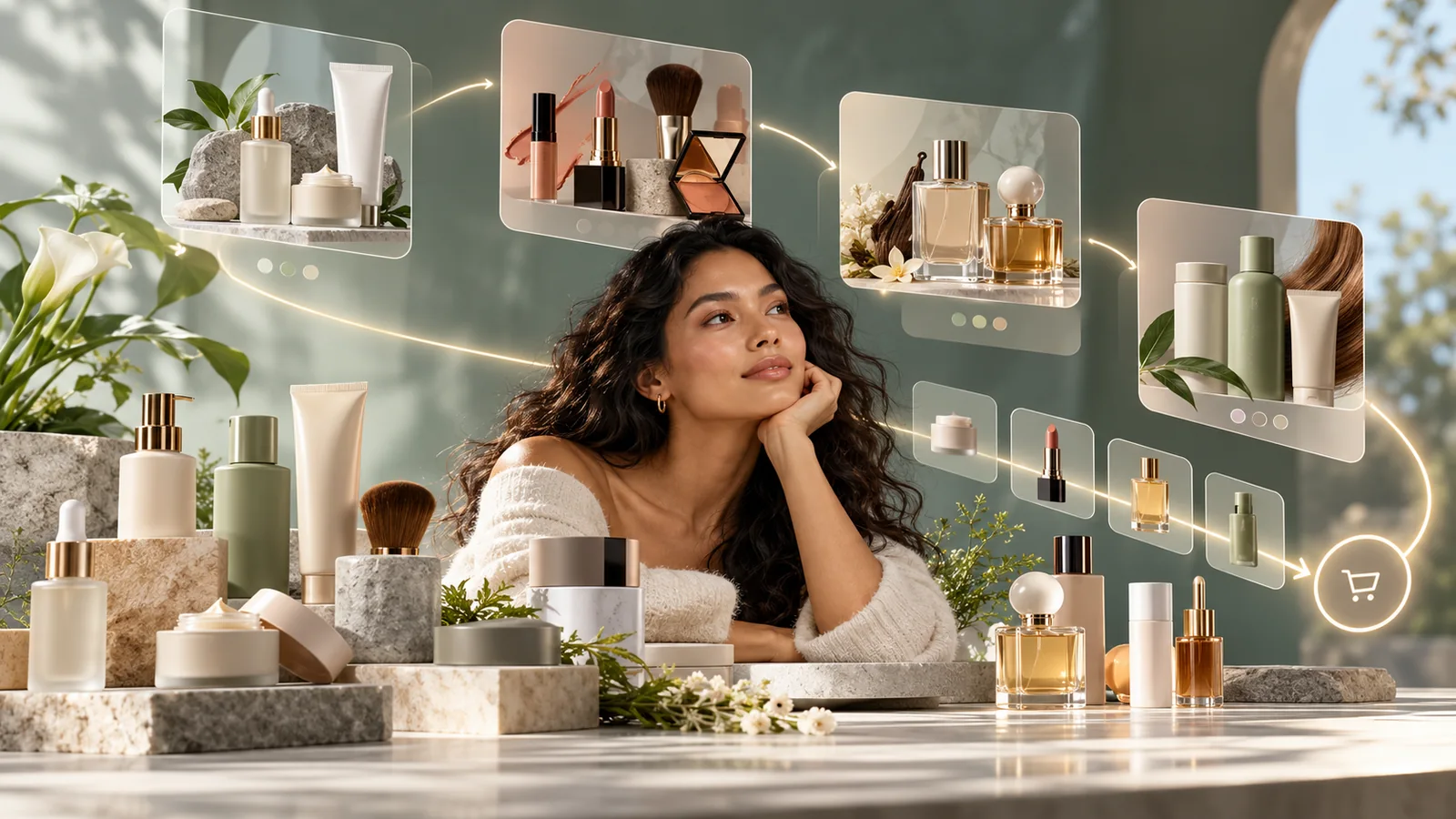
Ulta Beauty and Google announced Ulta AI on Ulta.com, built on Gemini Enterprise for Customer Experience, with an app rollout to follow. The assistant helps customers navigate the assortment and explore personalized recommendations.
The same release announced a rollout over the following month in AI Mode in Search and the Gemini app, including recommendations, comparison and streamlined checkout for eligible purchases through Universal Commerce Protocol. That is the announced scope and schedule, not verification of universal access on the date of this review.
Sources [11]
Business interpretation · Alse.Beauty
Product knowledge, comparison and transactional systems increasingly need to work across a retailer’s own channels and external AI surfaces.
Evidence boundary
The cited release gives no comparable active-user count. Eligible purchases and account or regional availability can restrict checkout.
Amorepacific
AMORE MALL
Launched 13 March 2026; payments and delivery integration planned
What the evidence shows
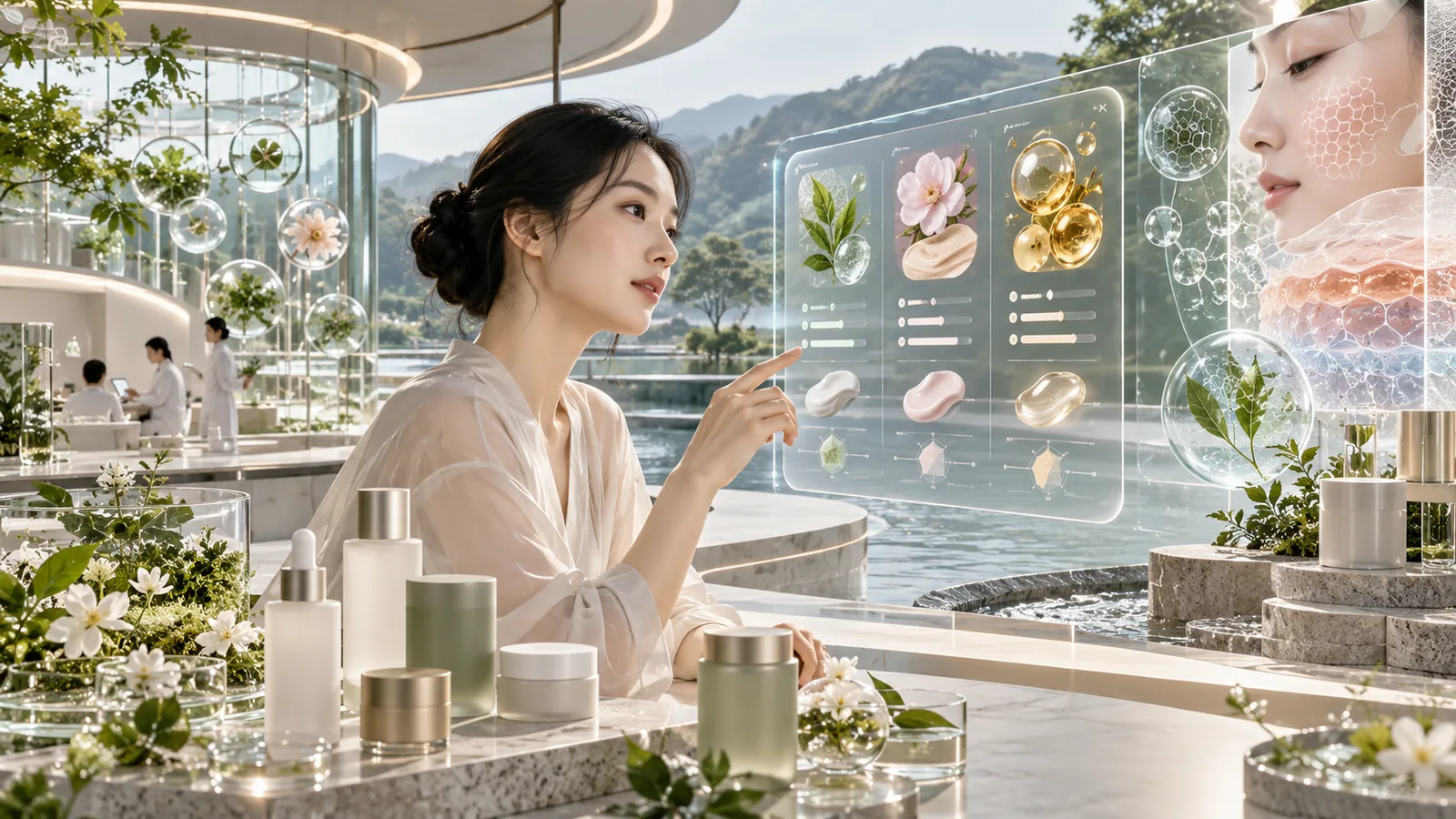
Amorepacific announced AMORE MALL in ChatGPT for conversational product search, recommendations and comparison of ingredients, claimed effects and prices. Customers can describe skin type and concerns across a multi-brand portfolio. The company describes it as the first ChatGPT app in Korea’s beauty industry.
Payment processing and delivery tracking are described as future extensions. The announcement’s reference to ChatGPT’s overall audience is not the audience of AMORE MALL. Comparing product claims also does not independently establish clinical efficacy.
Sources [12]
Business interpretation · Alse.Beauty
A multi-brand catalog can be organized around a person’s question rather than only categories and filters.
Evidence boundary
Search and comparison are separated from planned payment and delivery functions. No app-specific adoption figure is inferred.
Compare the operating models
| Company / service | Customer interface | Published status |
|---|---|---|
| L’Oréal Paris | Web · WhatsApp | Live service; published conversation count |
| Fenty Beauty | Live experience documented by its provider | |
| Jo Malone London | Web | Launched 2 December 2025 · US and UK |
| Kiehl’s | Web | Production deployment documented 11 September 2026 |
| YSL Beauty | Web | Production deployment · shared framework with Kiehl’s |
| Sephora | ChatGPT | US pilot announced 24 March 2026 |
| Ulta Beauty | Web · Gemini · AI Mode | Ulta AI launched; Google commerce rollout announced 22 April 2026 |
| Amorepacific | ChatGPT | Launched 13 March 2026; payments and delivery integration planned |
On the watchlist
La Roche-Posay: a brand agent is different from organic AI visibility
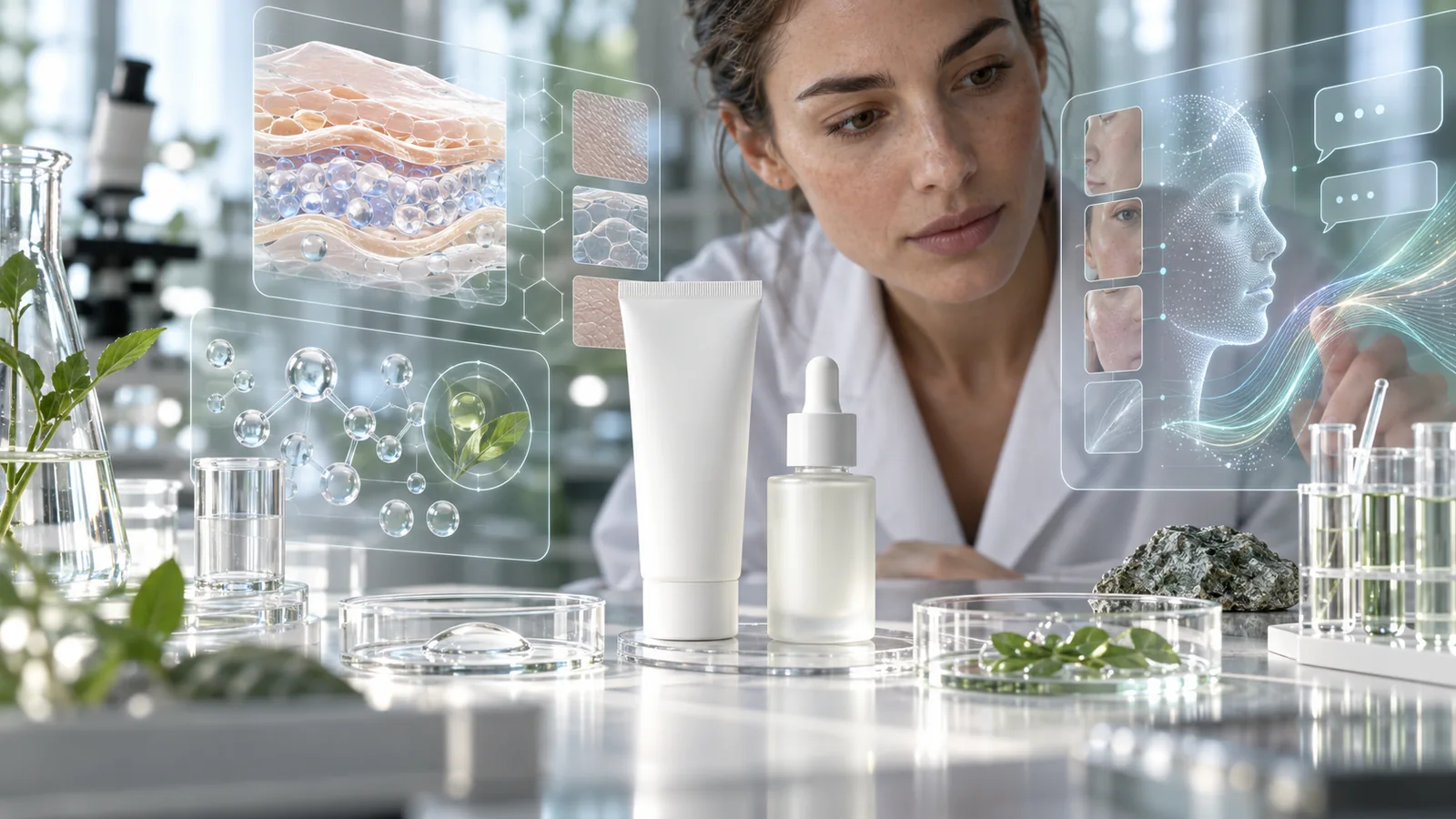
L’Oréal identifies a La Roche-Posay Brand Agent on LLM platforms such as Google. The cited corporate material does not provide the same operational detail or adoption measurements as the most documented cases above, so it remains a separate watchlist case.
EMARKETER’s Q1 2026 study analyzed more than 5,200 ChatGPT responses across nine personal-care and beauty categories. La Roche-Posay appeared in 81% of the sampled facial-skincare queries. This is a result for that study’s prompts and period—not a share of all ChatGPT conversations, sales or proof of Brand Agent use.
Research interpretation / 01
A new layer between intent and catalog

The cases describe different operating models: an advisor, a messaging assistant, fragrance discovery, order support and retailer apps. Their common feature is a conversational layer that interprets intent before a customer reaches a product or service action.
Alse.Beauty’s interpretation is that websites increasingly need to support several interfaces. A conversation may shorten navigation, but it still relies on reliable product data, current availability, transaction rules and an accountable customer-service process.
- 01Customer intent
- 02Conversation
- 03Verified product knowledge
- 04Product or service action
Research interpretation / 02
Product Knowledge Infrastructure
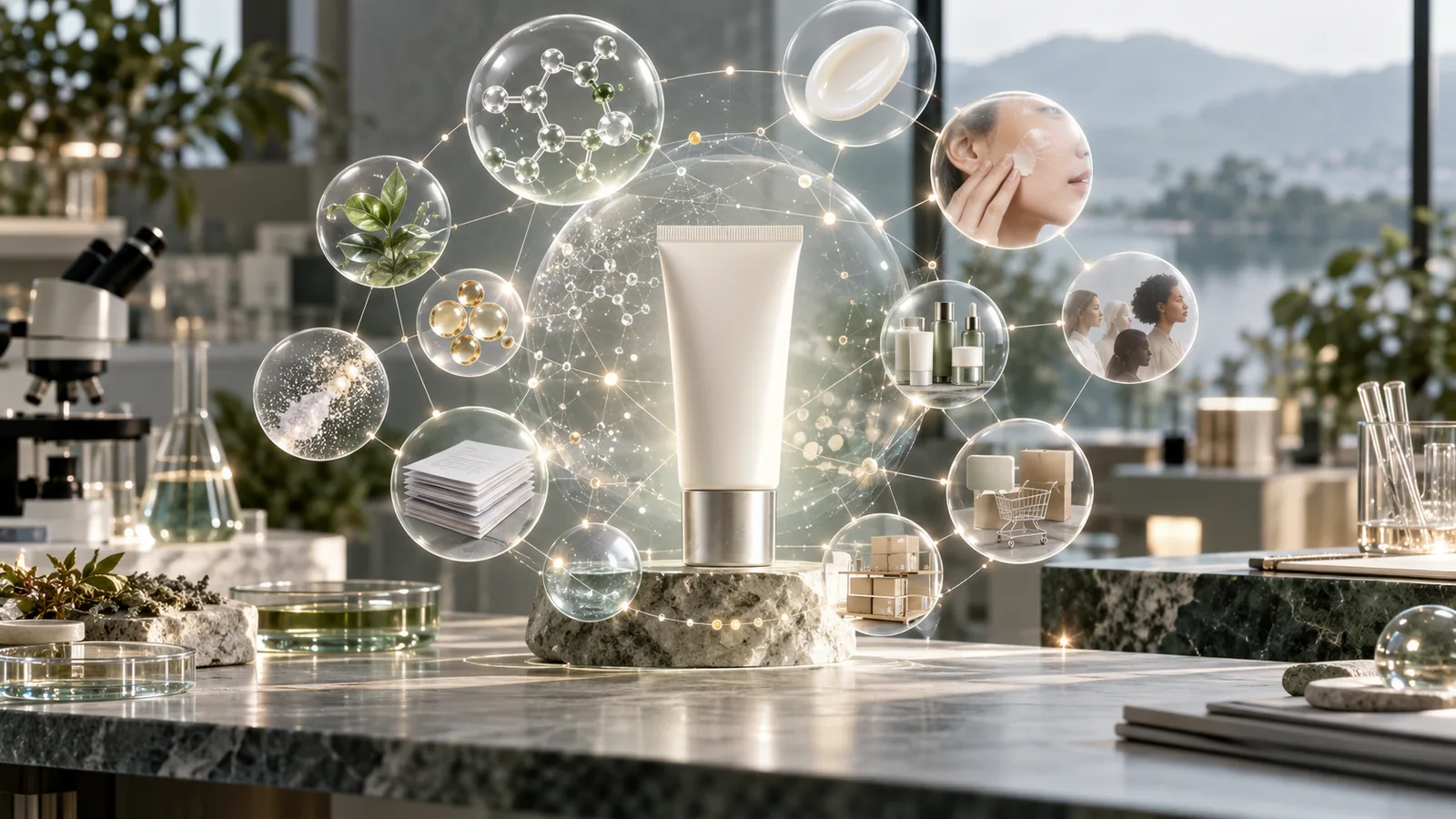
A beauty business needs an internally consistent account of what a product is, how it is used, its ingredients, intended audience, substantiated claims, limitations, compatibility, evidence, price and availability. This knowledge should remain consistent across the website, retailer feeds, marketplaces and support systems.
This is a proposed management framework, not a published industry standard or a promise of AI-search rankings. Structured data and a knowledge graph can make information easier to retrieve; they do not guarantee recommendation, safety or commercial success.
- 01Ingredients and attributes
- 02Evidence and claim boundaries
- 03Use and compatibility
- 04Price and availability
Research interpretation / 03
The physical product and its knowledge counterpart
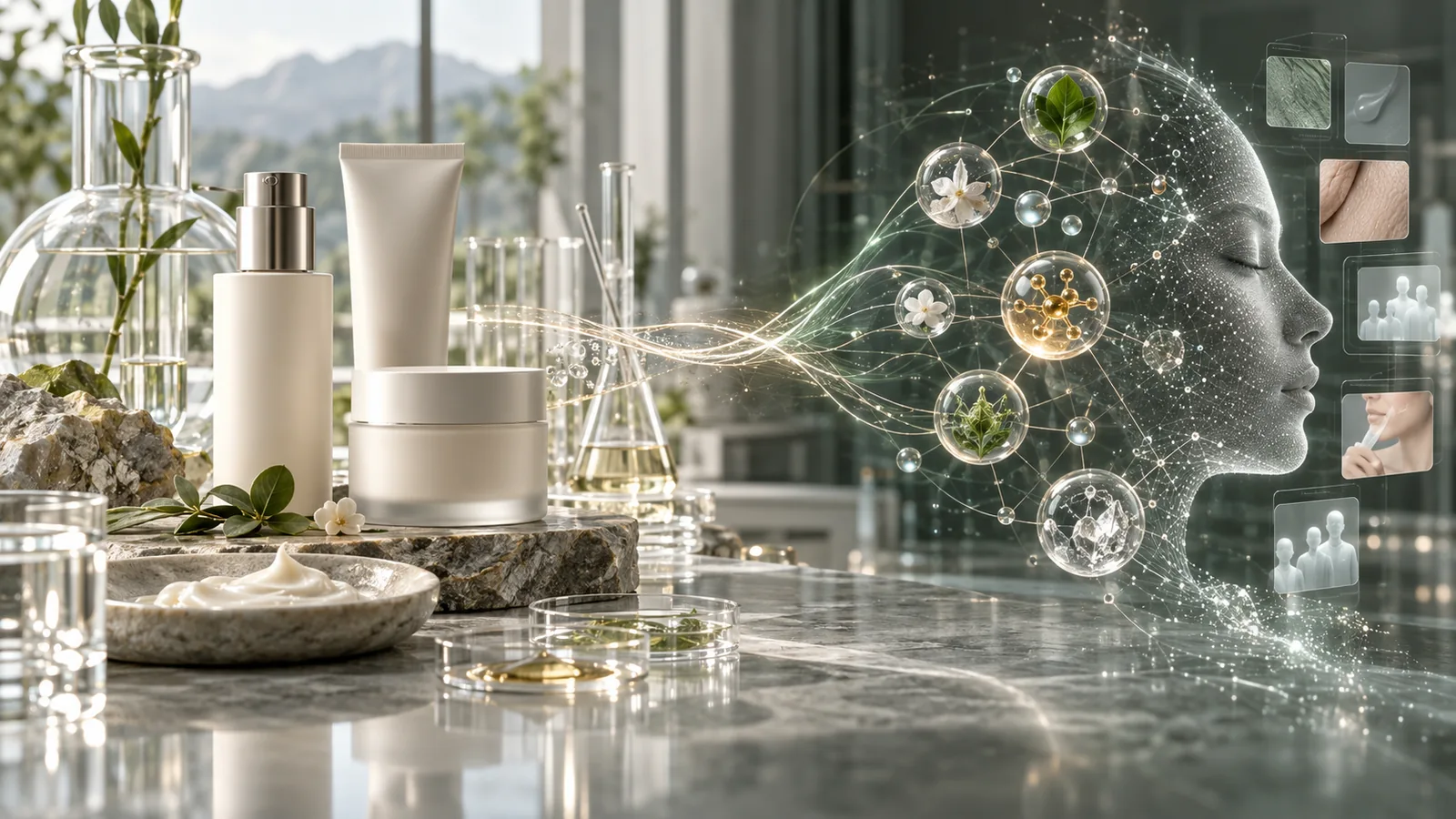
Formula, packaging, texture and sensory performance form the physical product. Ingredients, evidence, instructions, restrictions and distribution data form its digital representation. An AI system may encounter that representation before a customer ever sees the package.
The useful question is not only whether a brand has a chatbot. It is whether its knowledge can support a clear, traceable answer, whether an action uses current data, and whether a person can take over when a request exceeds the system’s scope.
- 01Physical product
- 02Documented knowledge
- 03Customer understanding
What a beauty business can do next
Begin with one customer decision and one well-defined scope. Audit the required product and operational data, set answer boundaries, and evaluate a pilot against an appropriate comparison. Consider usage, recommendation quality, conversion and retention together—not the number of AI announcements.
These deployments show that conversational AI already participates in beauty commerce. The evidence does not justify assuming universal adoption or guaranteed returns. The next competitive asset may be the quality of the knowledge behind the interface.
Discuss a research brief ↗Method and limitations
This is a source-based editorial review, checked on 28 September 2026. It covers public customer-facing deployments, not internal employee copilots. Computer vision or virtual try-on alone is not treated as proof of LLM use.
Primary company announcements and technology-provider case studies support deployment descriptions. EMARKETER supports only the separate visibility observation. Participant-reported metrics are not independently audited here; individual services, logins, purchases and regional access were not transaction-tested.
Dates refer to announcements or documentation unless explicitly stated otherwise. A future feature remains planned without later evidence. Undisclosed models, audience sizes and causal revenue effects are not inferred.
This independent Alse.Beauty analysis is not sponsored by or affiliated with the featured companies. Brand names identify the subjects of research. Illustrations are generated editorial concepts, not official campaigns, product photography or interface screenshots.
Sources
- L’OréalL’Oréal Paris Beauty Genius ↗
- Microsoft · 2025-10-29L’Oréal / Azure OpenAI customer story ↗
- charlesFenty × charles / Rose Amber ↗
- charlescharlesAI product platform ↗
- The Estée Lauder Companies · 2025-12-02Jo Malone London AI Scent Advisor ↗
- Google CloudThe Estée Lauder Companies customer story ↗
- The Estée Lauder Companies · 2026-06-17Pinterest Scent Scanner ↗
- Salesforce · 2026-09-11L’Oréal: agentic order-status support ↗
- L’OréalBeauty Conversation ↗
- Sephora · 2026-03-24Sephora app in ChatGPT ↗
- Ulta Beauty / Google Cloud · 2026-04-22Gemini-enabled shopping experiences ↗
- Amorepacific · 2026-03-13AMORE MALL in ChatGPT ↗
- L’OréalAugmented Marketing / La Roche-Posay Brand Agent ↗
- EMARKETER · 2026-04-13AI Visibility Index: Personal Care & Beauty, Q1 2026 ↗