ALSE.BEAUTY / RESEARCH LAB / 2026.09
Beyond a marketplace brand: 9 beauty launch architectures for 2026
How the route to market shapes the product, the evidence and the business before the first production run.

An original analytical framework. Architectures can overlap; the comparison is not a ranking.
The central finding
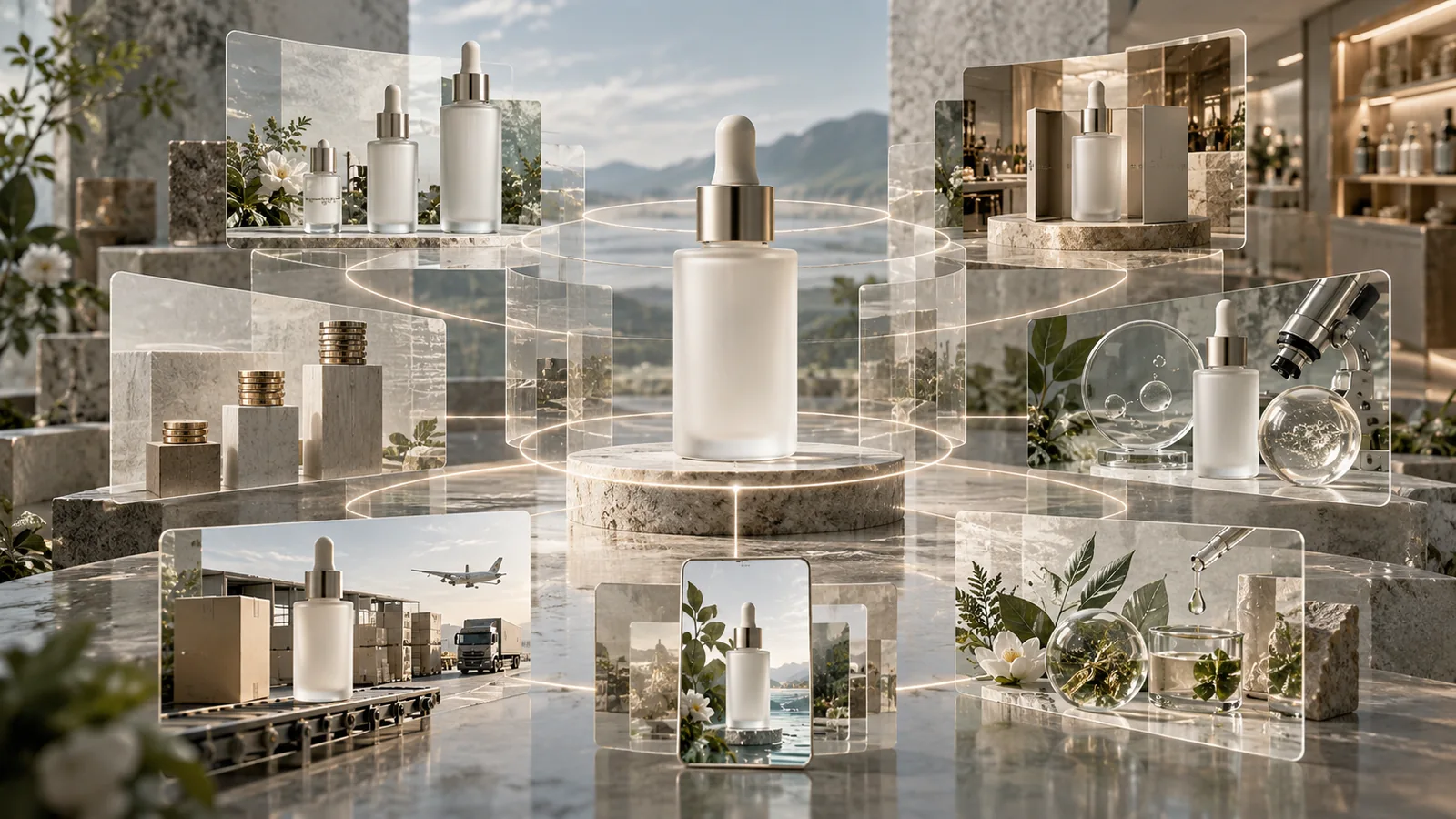
A new beauty venture often begins with a platform question: what could we sell on Amazon, Ozon, Wildberries, Tmall or Shopee? A founder then chooses products, a manufacturer, packaging and a target cost. That remains a viable approach. It is one possible starting point among several.
The environment in which demand first emerges can influence formula, claims, pack size, price, margin, evidence, initial order quantity, logistics and content. Choosing it after production can lock the business into a product poorly suited to its commercial route.
McKinsey’s June 2026 report assigns e-commerce 28% of global beauty sales in its channel classification. That category combines retailer websites, brand websites, marketplaces, social commerce and agentic commerce. The report identifies social commerce as the fastest-growing channel and projects approximately USD 4 billion in US TikTok beauty sales for 2026. This is an outlook, not a completed annual sales result.
A launch environment is an input to business design, not simply a destination for a finished product.
Sources [01]
What is a launch architecture?

A launch architecture connects five questions: where demand originates, what creates trust, where the transaction occurs, why customers return and whether the economics can sustain the route.
Discovery × Trust × Transaction × Retention × Economics
The multiplication sign is a strategic metaphor, not a mathematical model or a validated scoring formula. A serious weakness in one part can undermine the whole: demand does not repair negative contribution, professional credibility does not solve supply failures, and a viral first batch does not establish repeat purchasing.
Two constraints surround that system: Regulation, which determines what a product may be and claim in a particular market, and Supply, which determines whether production and logistics can support it. Product feasibility and these constraints should be assessed iteratively, alongside commercial design.
- 01Discovery
- 02Trust
- 03Transaction
- 04Retention
- 05Economics
Constraints: regulation and supply capability.
Why architectures rather than exclusive channels?

Alse.Beauty 9 Launch Architectures is an original analytical framework, not an official or universally accepted industry taxonomy. Its categories deliberately use different axes. They identify the factor most strongly shaping an early business.
Marketplace-first centers on platform demand; Creator-first on a source of trust; DTC on direct relationships; Dermocosmetic on evidence; Retail-ready on distribution requirements; Export-first on a destination market.
A venture can combine Creator-first, DTC and Export-first, or Professional Beauty, Dermocosmetic and Retail-ready. Identify a primary architecture in which to test demand first, followed by secondary routes that can scale demonstrated value.
Which commercial system should first prove that this product is needed?
Nine architectures at a glance
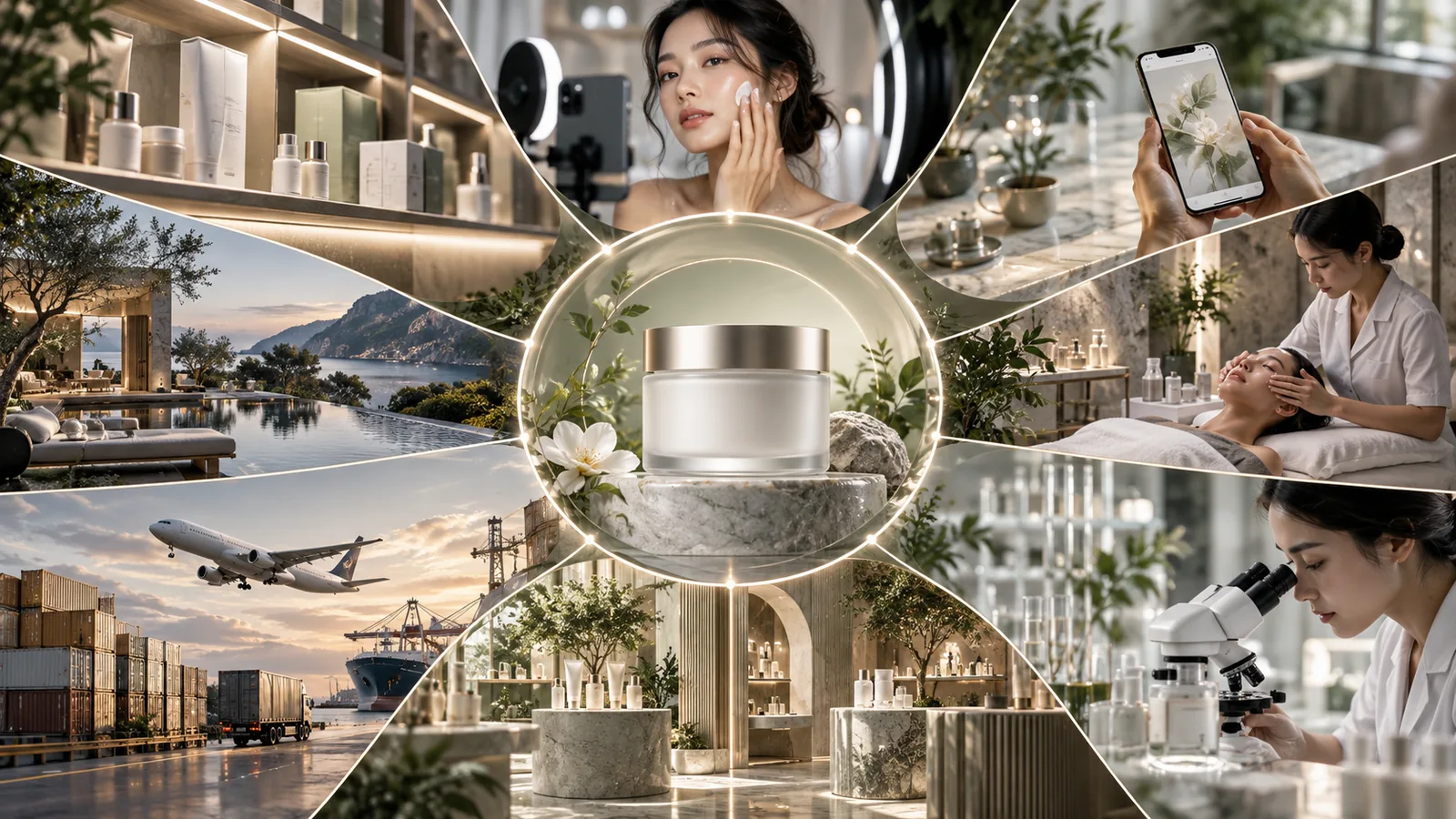
The same cream may require a different commercial design depending on its first route to the customer. The comparison below identifies the dominant principle and main risk; it does not rank one architecture above another.
| Architecture | Dominant principle | First demand / source of trust | Main risk |
|---|---|---|---|
| Marketplace-first | Platform | Search, reviews, product page | Platform dependence |
| Social-commerce-first | Content | Video, demonstration, social proof | Volatile attention |
| DTC | Direct relationship | Own funnel and brand experience | Acquisition cost |
| Creator / Expert | A person | Existing audience and personal trust | Key-person dependence |
| Professional Beauty | Practitioner | Treatment and recommendation | Long B2B cycle |
| Dermocosmetic / Pharmacy | Evidence | Substantiation and professional credibility | Claims and classification |
| Retail-ready | Distribution | Retailer environment and brand | Inventory and working capital |
| Export-first | Destination market | Local fit and credible provenance | Regulation and distributors |
| Hospitality / B2B | Experience | Use in a hotel, spa or club | Concentrated accounts |
01 / Marketplace-first
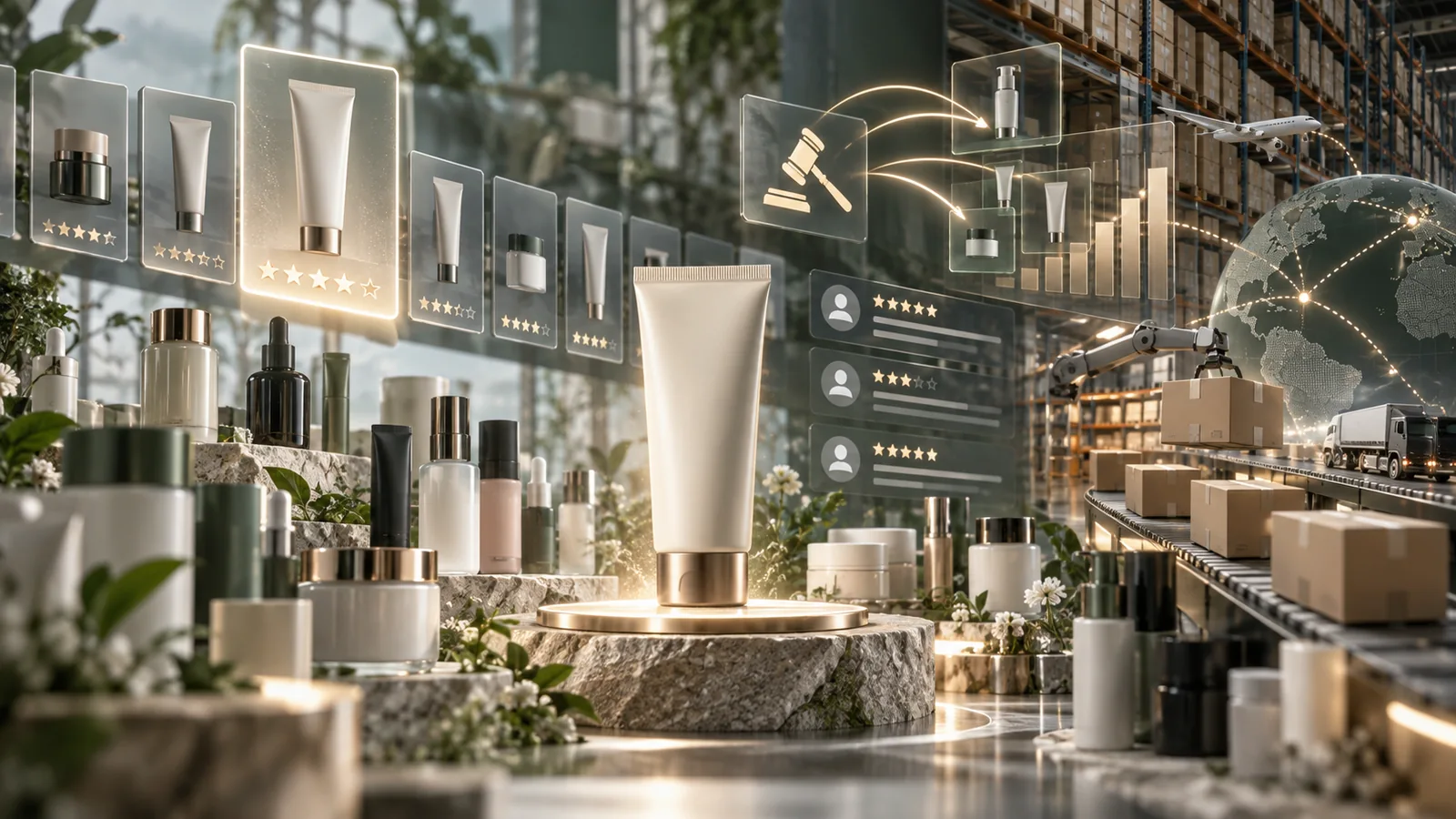
Platforms such as Amazon, Ozon, Wildberries, Tmall and Shopee can combine discovery, transactions, advertising, reviews and logistics. The product must communicate its purpose quickly within that environment. Search relevance, clear imagery, pack size and price positioning become design inputs.
The margin needs room for platform charges, paid visibility, promotions, fulfillment and returns. Package weight and dimensions can alter the economics even when factory cost stays constant. Reviews and ranking contribute to trust but remain subject to platform rules.
McKinsey projects that Amazon and TikTok’s combined US core beauty sales could exceed Sephora and Ulta’s combined sales in 2026. That comparison is a forecast in the cited report, not an established full-year result.
The central capability is converting existing platform demand into a repeatable, profitable sale. The central exposure is reliance on infrastructure the brand does not control.
Sources [01]
03 / Direct-to-consumer

DTC organizes the business around a direct customer relationship, supported by a website, customer service, CRM, permission-based communications, loyalty and, where appropriate, subscriptions. Customer information brings responsibilities as well as commercial value.
The unit of analysis extends beyond first-order conversion to acquisition cost, repeat purchase, contribution over the relationship, cross-selling and retention. A brand website offers space for routines, explanations and bundles that may not fit a short marketplace listing.
The trade-off is the cost of bringing people there. An attractive gross margin can coexist with poor economics when acquisition, service and fulfillment are expensive. Test whether the relationship becomes a durable asset rather than an expensive first transaction.
04 / Creator, influencer or expert

This architecture begins with trust in a person: a creator, makeup artist, hair professional, perfumer or qualified practitioner acting within applicable professional and advertising rules.
Audience → trust → identified need → product
An existing audience can reduce the burden of initial discovery, but it creates key-person dependence. Product quality, evidence and a reliable experience still matter; personal authority does not validate a claim.
Ask whether a customer unfamiliar with the founder can understand the product’s value. A maturing business translates personal trust into product trust and eventually a brand able to stand on its own.
05 / Professional Beauty
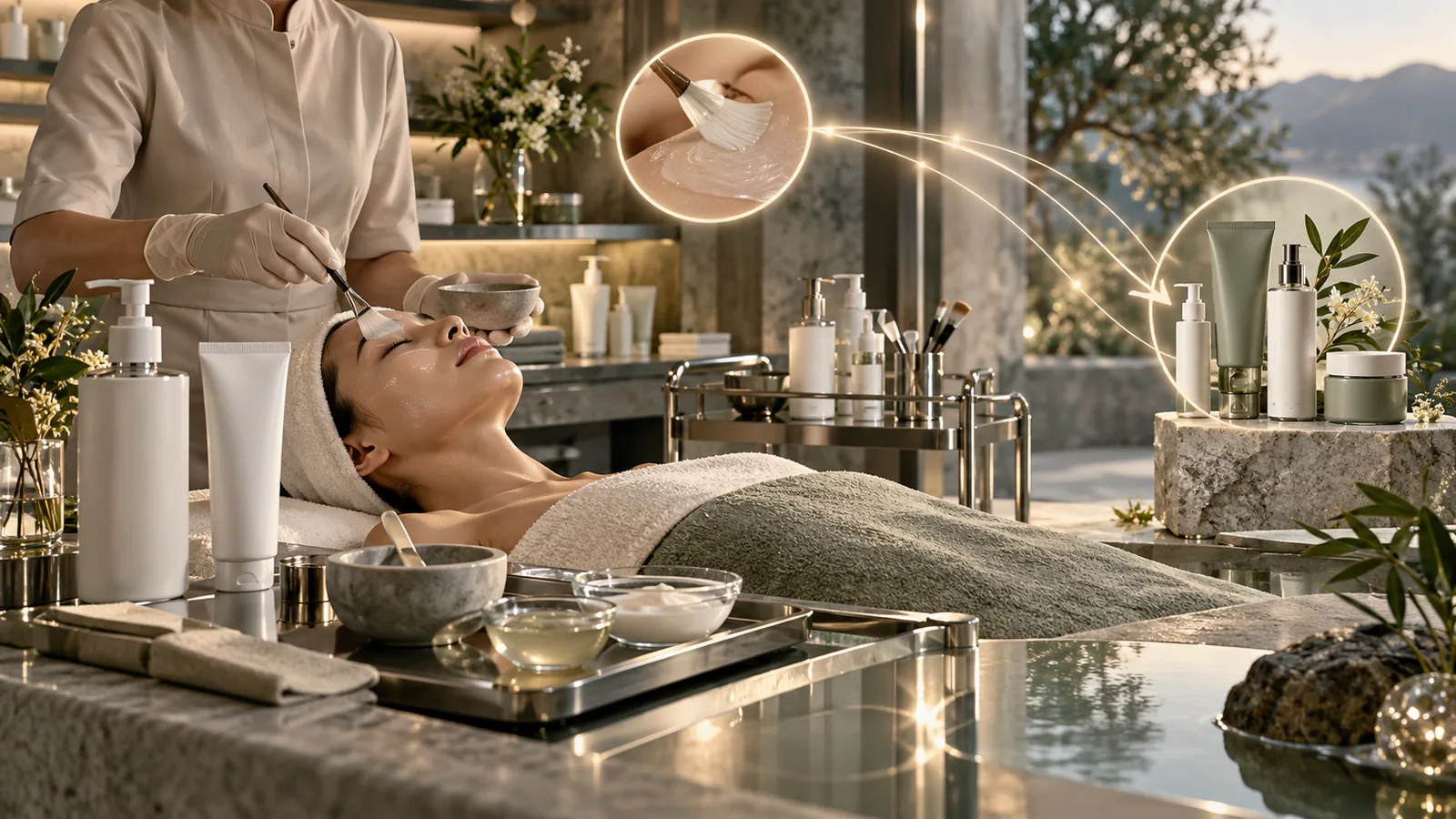
The first user, recommender or buyer may be a salon, spa, hair professional or aesthetic practice. A product may sit within a documented treatment protocol before it becomes a consumer retail item.
B2B relationship → professional trust → customer experience → home-care purchase
Design requirements can include training, instructions, compatibility within a routine, professional pack formats, home-care extensions, stable replenishment and repeat ordering. Professional use does not remove product-safety or claims obligations.
The asset is a network of practitioners able to explain and use the product appropriately. Longer sales cycles, onboarding and support demands should be included in the model before assuming that recommendations will scale.
06 / Dermocosmetic and pharmacy positioning

This positioning raises expectations of evidence, tolerability, transparency and professional credibility. It is a commercial description here, not a single legal category recognized worldwide.
The FDA does not recognize “cosmeceutical” as a separate legal category. Depending on intended use, a product may be a cosmetic, a drug or both. Intended use can be established through packaging, advertising, websites and other promotional material, as well as other factors.
In the EU, Article 20 of Regulation (EC) No 1223/2009 prohibits attributing characteristics or functions a cosmetic does not possess. Regulation (EU) No 655/2013 sets common claims criteria: legal compliance, truthfulness, evidential support, honesty, fairness and informed decision-making.
An evidence program may include safety substantiation, instrumental or consumer studies, tolerability work, ingredient rationale and documented methods, chosen for the product and proposed claims. Clinical-looking typography or an ingredient study cannot substitute for appropriate support for the finished-product claim.
07 / Retail-ready

A brand intended for specialist beauty stores, department stores, pharmacies or other retail partners must work operationally for the buyer as well as appeal to consumers.
Plan wholesale terms, the retailer’s margin, testers, shelf presentation, promotional calendars, delivery lead times, returns, replenishment, inventory and working capital. A retailer agreement can increase reach while increasing cash requirements and operational exposure.
Retail readiness therefore concerns economics and supply capability, not only attractive packaging. Retailers themselves span physical stores, websites and new interfaces: Sephora’s ChatGPT pilot and announced TikTok Shop pilot illustrate that expansion without proving every capability is universally available.
08 / Export-first

Choose the destination market before locking formula, claims and packaging. Manufacturing in South Korea, Italy, France, Japan or the UAE does not establish suitability for the United States, EU, UK, GCC or another market.
Review ingredient restrictions, safety documentation, responsible roles, labels, language, trademarks, testing, price, distributor terms and partner capability. Manufacturing origin and intended market are separate decisions.
United States
Under MoCRA, covered manufacturers and processors register facilities and renew every two years. The responsible person lists marketed products, including ingredients, with annual updates. Statutory exemptions apply. Registration or listing does not mean FDA approval and should not be presented as endorsement.
European Union
A Responsible Person, safety assessment and supporting product documentation form part of the framework under Regulation (EC) No 1223/2009. Required information is submitted through CPNP before market placement under Article 13. That notification is not product approval; it does not replace substantive compliance. No additional national notification is needed for the same purpose. Additional requirements may apply, including notification provisions for certain nanomaterials.
Sephora and CJ Olive Young’s 4 August 2026 announcement scheduled 19 Korean brands for more than 500 US Sephora stores and Sephora.com from 20 August. The announced scale illustrates coordinated market access; it is not evidence that an unrelated export venture will achieve comparable distribution.
09 / Hospitality and B2B
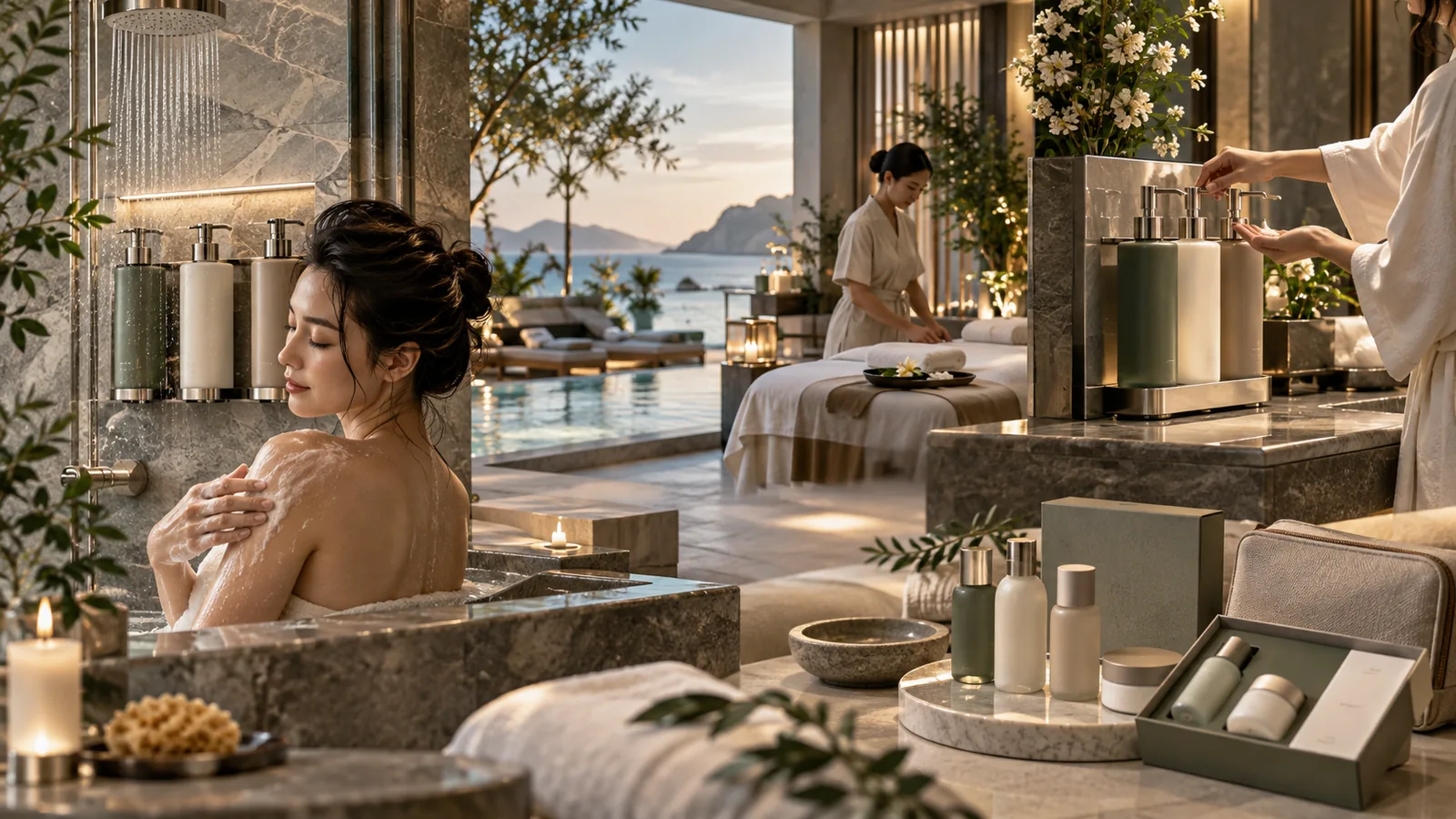
A hotel, resort, spa, gym or wellness club can provide the first encounter with a product. A guest may use it before knowing the brand, creating a possible route from institutional purchase to consumer recognition.
B2B contract → physical experience → recognition → consumer interest → retail product
Bulk packs, refill systems, hygienic servicing, durable dispensers, consistent supply, procurement terms and support can matter more initially than a retail-sized bottle. Refill operations still need appropriate quality controls.
This can be an environment for developing a consumer brand, not a guaranteed conversion mechanism. Model account concentration, contract terms and servicing costs, then test whether guests actually seek out the product afterward.
Combining architectures without losing direction

A multichannel business is not channel-neutral. Channels can have different roles and timing, and expanding too early can multiply inventory and operational costs.
- Creator → DTC → retail
- Professional → DTC → pharmacy
- Social commerce → marketplace → retail
- Export-first → retail-ready
- Hospitality → DTC → specialist retail
- Dermocosmetic → pharmacy → marketplace
These are illustrative pathways, not validated recipes. Use the primary architecture to test demand, trust, pricing, contribution and repeat behavior. Each additional channel should answer a new commercial question.
AI as a layer across the nine architectures

AI can participate in discovery, consideration, comparison, transaction and service. In this framework we treat it as a cross-cutting capability, rather than adding a tenth architecture.
Possible roles include marketplace shopping assistance, DTC advice, retailer discovery, an expert’s knowledge interface, multilingual product information and professional support. Each requires a defined scope, reliable information and appropriate human oversight.
Sephora announced a US ChatGPT pilot on 24 March 2026 for discovery, recommendations and shopping. Payment and checkout inside that experience were assigned to future updates. A launch capability and an announced roadmap must remain distinct.
Sources [04]
8 beauty cases: how conversational AI changes the customer journey ↗What makes a beauty brand readable by AI?

A useful product record connects identity, category, ingredients, purpose, directions, applicable warnings, substantiated claims, evidence, pack size, variants, price and availability. Compatibility should be stated only when justified.
Google says AI Overviews and AI Mode do not require special AI markup, a new schema type or new machine-readable AI files. Ordinary search fundamentals still matter: crawlability, helpful content, accessible text, useful images, internal links and structured data consistent with the visible page.
This guidance is specific to Google Search; it is not a promise of inclusion or ranking in every AI system. Machine-readable knowledge is an operational discipline, not an SEO shortcut.
Sources [11]
Design product and route together

A linear process may run from idea to formula, packaging, production and only then a search for customers. A commercially informed process starts earlier with the destination market, discovery, trust and channel economics, and uses those findings to shape product requirements.
Market → discovery and trust → route economics → product requirements → formula, claims and packaging → production
Social commerce may change sensory and demonstration needs; marketplaces the price-to-pack relationship; professional use the format and protocol; retail the wholesale margin and cash cycle; export the label and regulatory preparation; hospitality the refill design; evidence-led positioning the testing program.
This is iterative work. Commercial intent cannot override formulation feasibility, safety or regulation, and research may require revisiting earlier decisions.
Seven questions before the first production run

1. Discovery
Where will the customer first encounter the product: search, a creator, a practitioner, a shelf, a hotel or an AI interface?
2. Trust
What supports belief: appropriate evidence, a recommendation, verified reviews, experience or a product trial?
3. Transaction
Where does the first purchase occur, and who controls its terms and customer relationship?
4. Retention
Why would the customer buy a second, third or fifth time? Test performance, routine, service and replenishment rather than assuming loyalty.
5. Economics
Does contribution withstand the actual cost of reaching and serving that customer?
6. Regulation
What can this product contain, do and claim in the selected jurisdiction?
7. Supply
Can manufacturing and logistics support an unexpectedly successful pilot without compromising quality?
Use the answers to define the formula brief, pack format, minimum order quantity, pricing and channel plan. Unresolved questions become research tasks before commitments are made.
Cost of Route to Market

A low factory cost does not establish strong unit economics. Four similar serums sold DTC, through a retailer, through affiliates or through an overseas distributor can generate very different contributions at the same consumer price.
Include platform and payment fees, retailer or distributor discounts, acquisition, affiliates, shipping, warehousing, returns, samples, promotions, support and the working-capital cycle. Avoid counting the same cost twice and separate fixed launch investment from recurring per-unit costs.
Cost of Route to Market is Alse.Beauty’s analytical frame for comparing the commercial cost from production to initial and repeat purchasing. It is not a standardized accounting metric. Define the period, unit, net revenue basis, cost allocation and cash timing before comparing scenarios.
A practical output is a scenario model with explicit assumptions and sensitivity ranges, rather than one unexplained “profit” number.
Marketplace remains one credible route

A brand can originate in platform search, a creator community, social content, a direct relationship, professional use, evidence-led positioning, export distribution or a hospitality contract. It can later add other routes.
In which environment should the product first demonstrate that customers need it?
That answer can change the formula brief, claims, packaging, price, cost target, initial batch, research program, manufacturing location, content, supply chain and funding needs. A marketplace is a legitimate architecture without being the mandatory center of every venture.
Research conclusion

The nine architectures identify different ways of proving early commercial viability. They are compatible lenses, not mutually exclusive company types or a ranking of guaranteed opportunities.
Platforms, interfaces and advertising costs will change. The durable questions remain: how demand forms, why people trust, where they purchase, why they return, whether the economics work, whether the proposition is lawful and whether supply can deliver.
Design a beauty business around a specific mechanism for creating, testing and scaling demand.Discuss a research brief ↗
Method and status of the framework

Alse.Beauty 9 Launch Architectures is an original analytical framework for comparing launch scenarios, product requirements, channel economics, scaling risks and international expansion. It is not an official industry taxonomy or an empirically validated prediction model.
Source-based review updated on 28 September 2026. Market estimates and forecasts remain attributed to their authors. Announced launches are described using the dates and scope in the source; platform access and actual transactions were not independently tested.
The financial discussion is a planning framework, not an investment return forecast. Regulatory summaries support strategic scoping and do not replace product-specific professional advice. Relevant rules and service availability can change.
Illustrations are AI-generated editorial concepts, not official materials, product photographs or interface reproductions from the companies mentioned. No sponsorship or affiliation is implied. The images do not encode quantitative data; the tables and text carry the exact model.
Research sources

Primary corporate announcements, official regulatory materials and Google documentation support the factual statements. McKinsey provides the cited market estimates. Alse.Beauty’s proposed model and business interpretation are distinguished from those sources.
- McKinsey & Company · 2026-06-18From aisle to algorithm: The beauty categories, channels, and concepts shaping 2030 growth ↗
- Sephora · 2026-09-02Sephora Drop Shop / TikTok Shop ↗
- Sephora / CJ Olive Young · 2026-08-04OLIVE YOUNG-curated K-beauty: US market launch announcement ↗
- Sephora · 2026-03-24Sephora app in ChatGPT ↗
- FDACosmeceutical ↗
- FDAIs It a Cosmetic, a Drug, or Both? ↗
- FDARegistration & Listing of Cosmetic Product Facilities and Products ↗
- European UnionRegulation (EC) No 1223/2009 · Articles 4, 10, 11, 13, 20 ↗
- European CommissionRegulation (EU) No 655/2013 · Common criteria for cosmetic claims ↗
- European CommissionCosmetic Product Notification Portal (CPNP) ↗
- Google Search CentralAI features and your website ↗
02 / Social-commerce-first
Here, attention can precede purchase intent. A customer encounters texture, a demonstration, a creator or a useful story before deciding to search for a product.
Content → attention → demonstration → social proof → transaction
Consider application mechanics, sensory experience, packaging, substantiated benefits, content production, affiliate commissions and the ability to replenish after a demand spike. A visual effect is not, by itself, evidence of long-term efficacy.
Using Charm.IO data, McKinsey reports approximately 260% annual growth in US TikTok beauty sales since 2023 and a 2026 outlook near USD 4 billion. Historical growth does not establish future profitability. Sephora’s 2 September 2026 announcement scheduled its US Drop Shop pilot from 19 September, with curated drops and creator content. We report that announced schedule without treating it as independent confirmation of ongoing availability.
Sources [01][02]